How to recognise Amarone della Valpolicella blind
Deep garnet, full and very warm, made from dried grapes: raisin, prune and black cherry with chocolate and spice, a bittersweet finish.
How to use this note: the lines below say what a typical glass most often shows, and what it sometimes shows instead. A single glass can differ, so look for the pattern rather than one clue. The words are the same ones Deduvin asks you to tap. Read the lines in the order you taste: the look first, then the nose, then the palate.
Look
- Colour: most often garnet, sometimes ruby.
- Colour depth: deep.
Nose
- Smell strength: medium.
- Fruit: most often black fruit, sometimes red fruit.
- Ripeness of the fruit: jammy or dried.
- Aromas to look for: raisin, fig, prune, chocolate, cocoa, clove, cinnamon, nuts, almond, and leather.
Palate
- Sweetness: most often dry, sometimes off-dry.
- Acidity: medium.
- Tannin: most often medium, sometimes high.
- Body: full.
- Alcohol: high.
Easily confused with
- Valpolicella Ripasso. Same grapes and the same raisin note: a full body and real heat in the throat point to Amarone; medium body and moderate warmth point to Ripasso. How to tell Amarone della Valpolicella and Valpolicella Ripasso apart
- Port (ruby, LBV). Both are dark, warm and full of dried fruit: clear sweetness and the heat of a fortified wine point to Port; a dry, bittersweet finish points to Amarone. How to tell Port (ruby, LBV) and Amarone della Valpolicella apart
Where it comes from
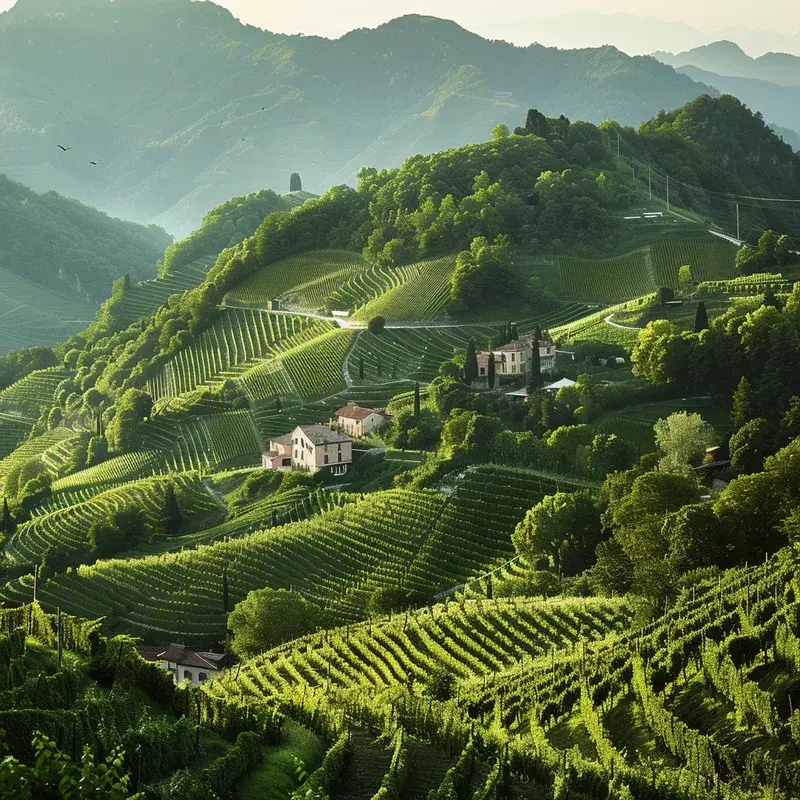
Origin: Valpolicella, Veneto, Italy. Grape: Corvina blend.
- Style family: Full, ripe and spicy red.
- Climate: Moderate.
- Other: Classic region and Blend.
- Old or new world: Old World.
- Price: Premium.
Other wines in the same family: Shiraz (Barossa, warm Australia), Grenache blend (Southern Rhône, Côtes du Rhône), Garnacha (Spain), Primitivo, Zinfandel, Malbec (Mendoza), Carmenère (Chile), Pinotage (South Africa), Montepulciano, Nero d'Avola (southern Italy).